
Manchester is the only city in England that makes a visitor choose a side before they have even found a hotel room. Six kilometres of the Regional Centre separate Old Trafford from the Etihad Stadium, but the real distance between them is not measured on a tram timetable. It runs through a century of steel-and-brick industrial grandeur giving way, over one astonishing week in September 2008, to Abu Dhabi money and floodlit glass. A proper football pilgrimage here is not a stadium tour bolted onto a city break. It is two cathedrals, two congregations, and a city that has learned to hold both without apologising for either.
Old Trafford: the theatre of dreams
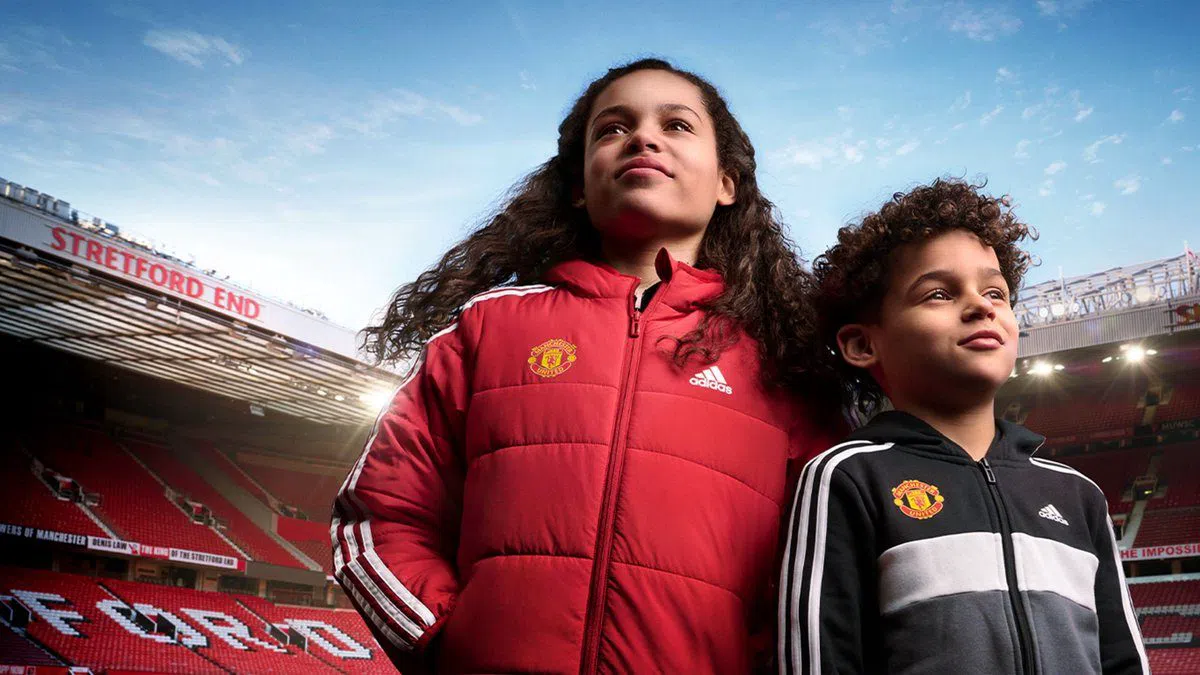
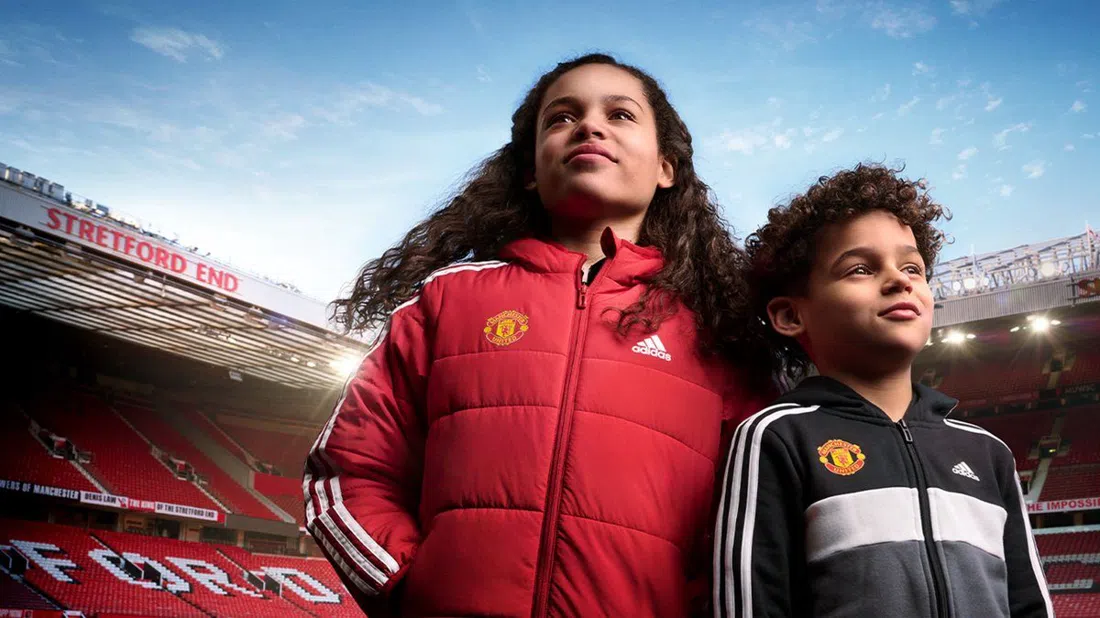
Everything about a United pilgrimage starts at the ground, and it should. Opened in 1910, expanded and rebuilt after being bombed to a shell during the Blitz, and pushed past 74,000 seats in the decade after the 1999 Treble, Old Trafford is the physical record of what the club built itself into across a century, long before anyone talked about "brand." The Old Trafford Stadium Tour & Museum (Old Trafford) is still the largest club stadium in England by capacity, a fact United fans will mention before you have finished paying for your ticket, and the tour earns the cliche stamped on its own signage: this really is the Theatre of Dreams, Bobby Charlton's name for it, not a marketing department's. The standard adult tour runs £28, a family ticket £75, and it takes school groups and stag parties with equal ease via manutd.com. The one rule that catches visitors out: the tour closes entirely on home match days, so anyone building a trip around fixtures needs to check the calendar before the hotel, not after. Inside, the museum does not flatter the club uncritically — Munich 1958 is treated with real weight, not as a footnote before the trophies — and that honesty is worth the entry fee on its own, especially for a visitor who only knows United as a global commercial entity rather than a club with a genuine tragedy at its centre.
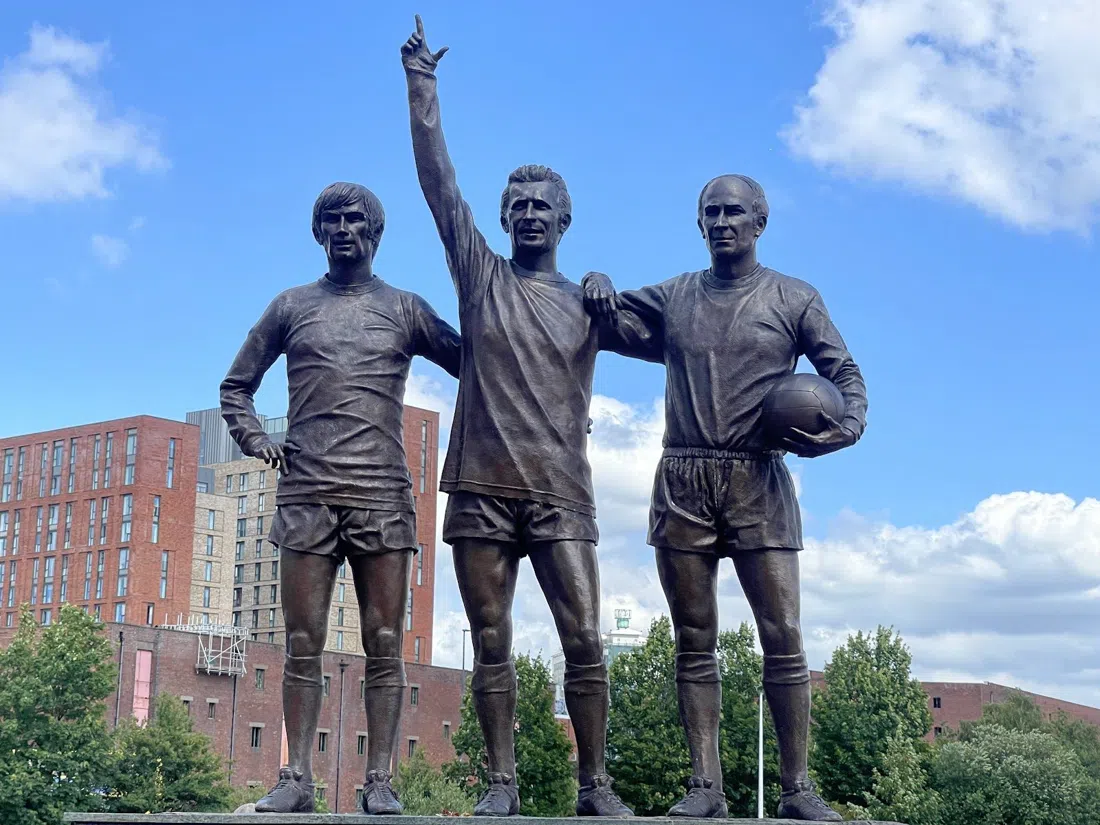
A hundred metres from the ground stands the United Trinity Statue (Old Trafford), George Best, Denis Law and Bobby Charlton cast together, unveiled in 2008 on the fortieth anniversary of the 1968 European Cup win — the first by an English club, and the result United fans still measure every later triumph against, 2026 included. It costs nothing, the forecourt is open whenever the stadium precinct is, and it is, without much competition, the single best photograph a pilgrimage like this produces. Go early on a non-matchday if you want it without fifty other people in the shot; on a matchday morning it becomes a genuine gathering point, flags and scarves and pre-match nerves, which is its own kind of photograph entirely.
Chester Road: the matchday ritual
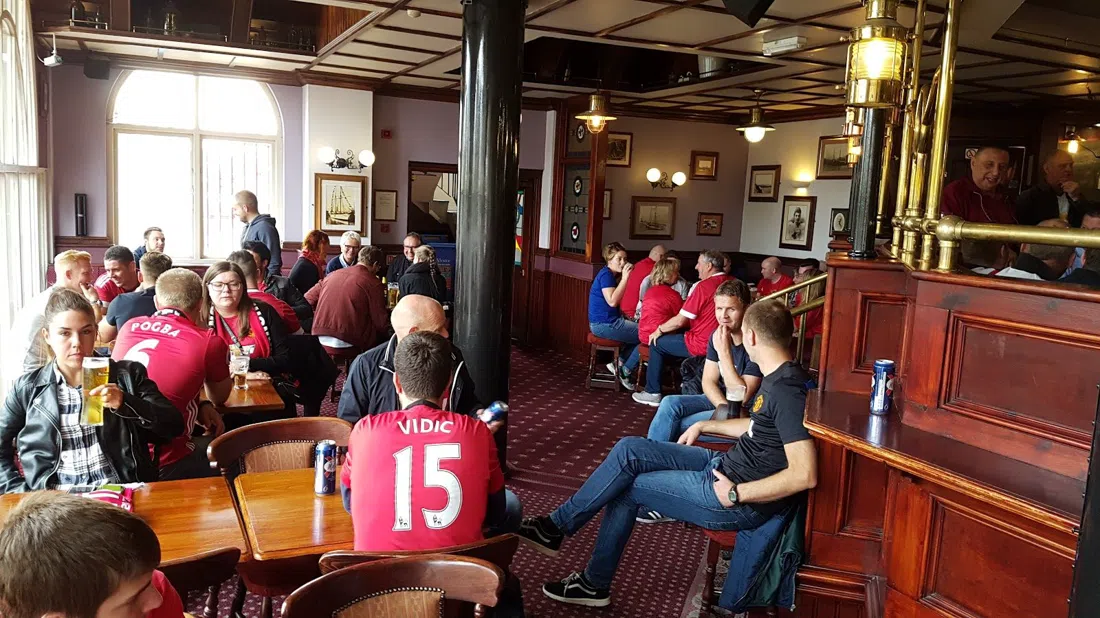
United's pre-match ritual happens on Chester Road and Warwick Road, not inside the ground, and three pubs and a chip shop tell you more about the club's actual fanbase than the museum does. Bishop Blaize (Chester Road) is the closest pub to the stadium and the default first stop for away fans, tourists and anyone without a rosette to prove their loyalty — it is a Wetherspoon, priced accordingly, loud and unpretentious, and critically it does not police colours or badges at the door. That makes it the honest recommendation for an international reader who wants the atmosphere without the risk of being turned away, and it takes groups without needing to book ahead.
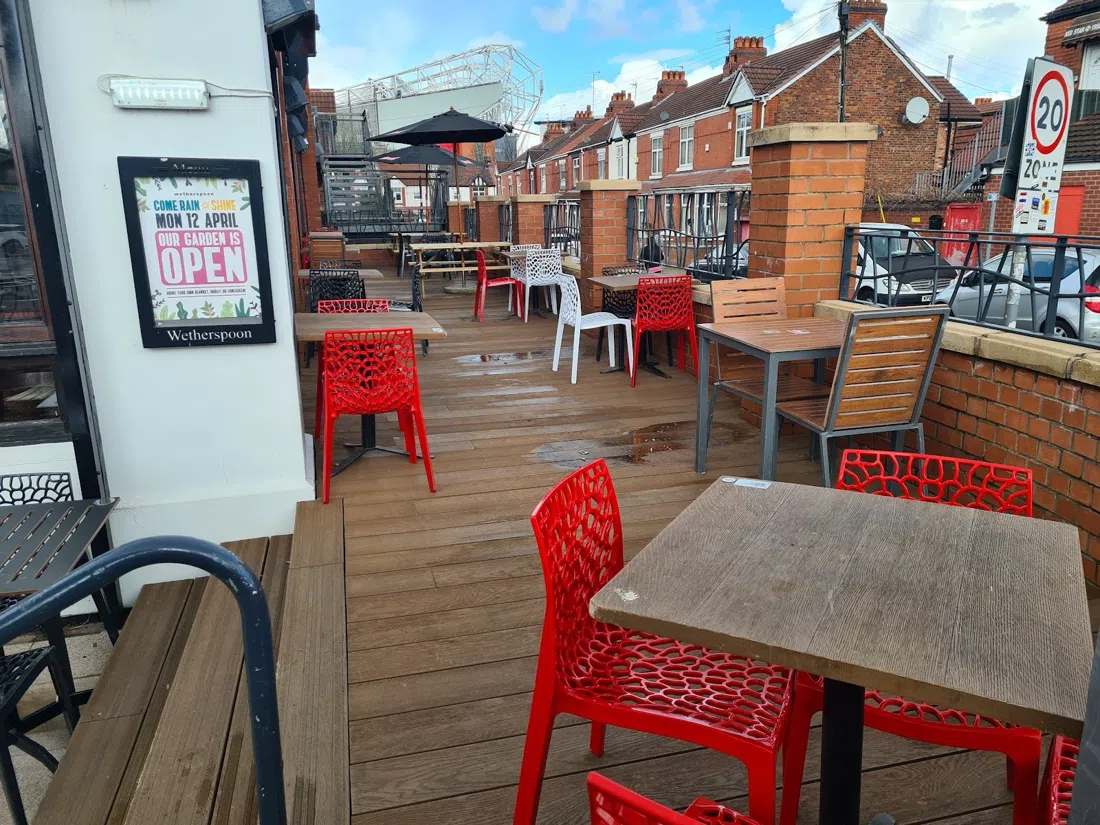
The Trafford (Warwick Road), by contrast, is home fans only. No away colours, no half-and-half scarves, and staff will ask you to leave if you're wearing the wrong shirt — this is worth stating plainly rather than discovering it on the door, because it is rawer and more tribal than Bishop Blaize, closer to what a matchday pub actually felt like before stadiums became tourist attractions, and that is exactly what makes it worth knowing about rather than avoiding altogether, provided you're travelling in United colours or none at all.
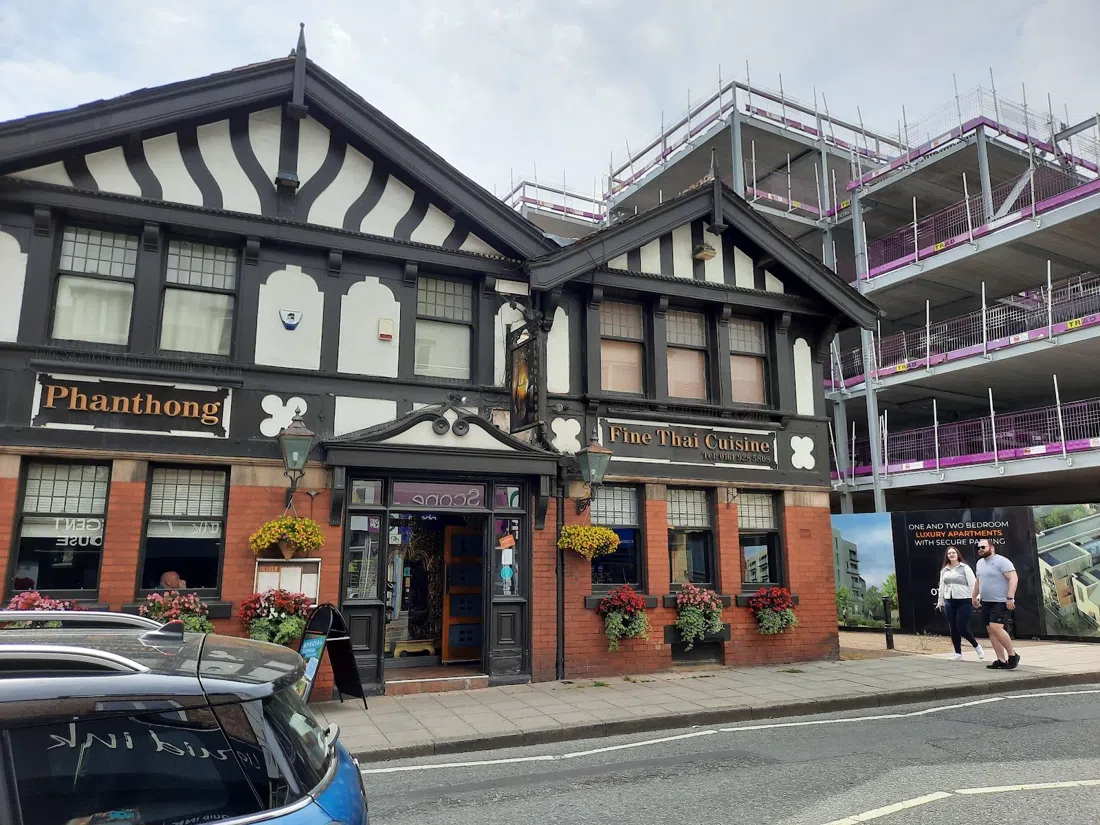
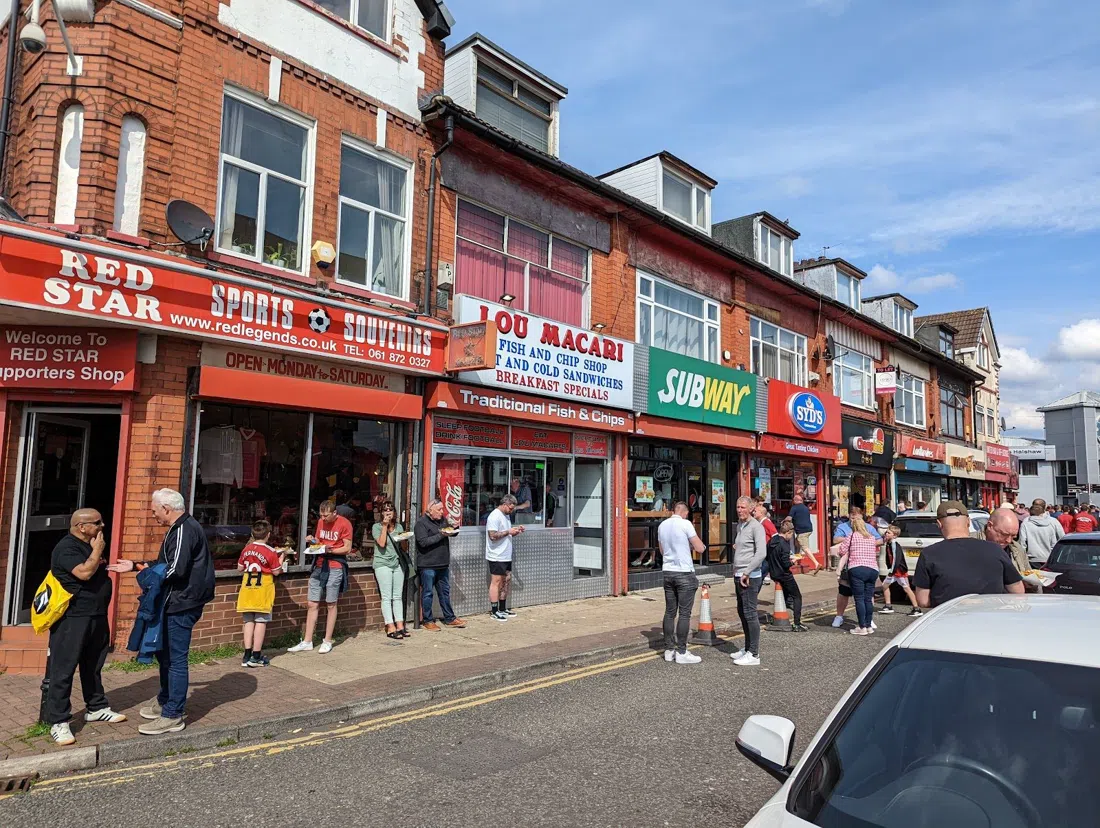
For a calmer alternative, especially with a mixed group or children in tow, Sam Platts (Water's Reach, canalside) sits on the Bridgewater Canal a short walk from the ground, takes groups without fuss, and runs as a proper food pub by day before the matchday crowd thickens toward kick-off — the better choice if the plan includes lunch as well as a pint, and priced a notch above the Wetherspoon end of Chester Road for the trade-off of table service and a canal view. And no United pilgrimage is complete without Lou Macari Fish & Chip Shop (Warwick Road), no booking required, no pretension, just a quick, honest portion eaten on the walk to the turnstiles — the detail that separates people who have actually done this walk from people who read about it in a listicle.
Manchester hotel search is worth doing early if any of this weekend falls on a fixture date — Old Trafford hotel stock tightens fast around home games, and prices move with the fixture list the way they do around any major event.
Sleeping inside the pilgrimage
Most stadium tourism ends with a taxi back into the city centre. This one does not have to. Hotel Football (Old Trafford), owned by United's Class of 92 — Ryan Giggs, Gary and Phil Neville, Paul Scholes and Nicky Butt — sits directly across from the ground and is built for exactly this trip: matchday parties are welcome, rooftop five-a-side pitches sit above the rooms, and rates run £100-180 a night depending on season and fixture proximity. The genuine draw for a serious fan is the seven Class of 92 memorabilia rooms, out of 133 total — book these specifically, and book them well ahead, because they sell out first and the hotel does not hold them back for walk-ins. It is, in effect, the only hotel in the city built by people who understand exactly what a pilgrimage like this one is for.
New money's cathedral: the Etihad
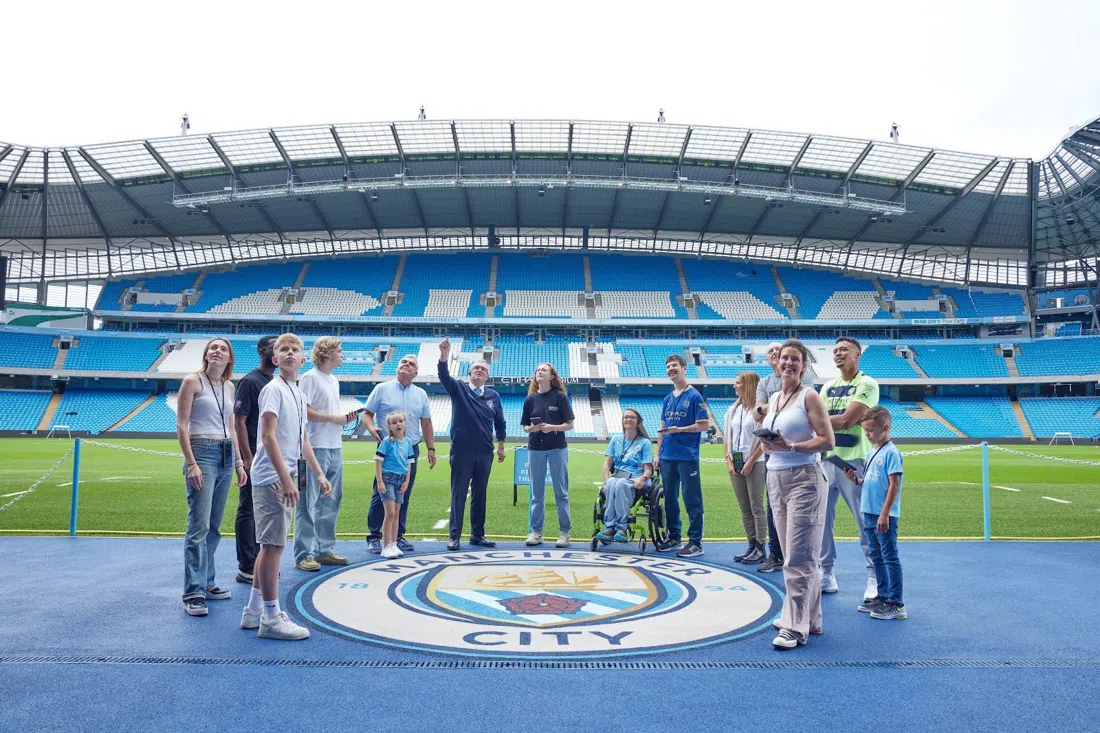
Cross the city to east Manchester and the register changes completely. Where Old Trafford is grandfathered-in grandeur, the Etihad Stadium Tour (Etihad Campus) sells the other half of the derby's story: a stadium built for the 2002 Commonwealth Games and reshaped since 2008 into the physical centre of Abu Dhabi-funded ambition, steel curves instead of red brick, a training campus instead of a century of accumulated scarves. Standard tours run £32-45 for adults, VIP options from £85, and larger groups can add the City Football Academy leg to see the training complex that City's ownership actually built its modern reputation on — arguably a more instructive stop than the stadium tour itself for understanding how the club overtook United on the pitch this past decade. Access tightens on matchdays, so as with Old Trafford, check fixtures before booking rather than after.
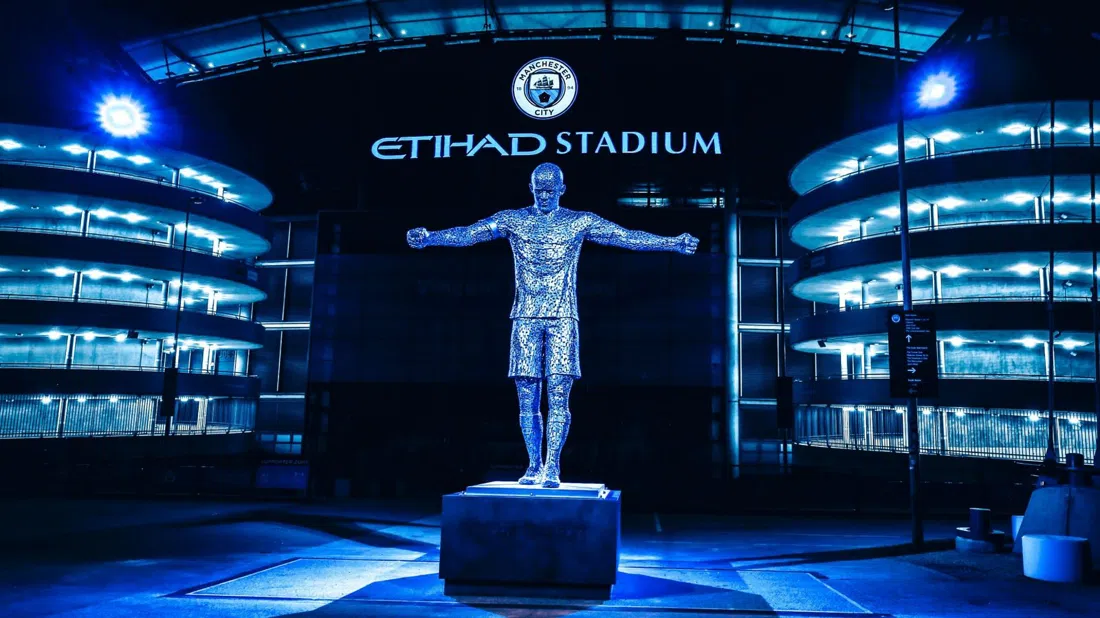
City's answer to the United Trinity stands outside the ground: the Kompany, Silva & Agüero Statues (Etihad Campus), commemorating the trio most associated with the club's title-winning transformation — a captain, a conductor and a finisher, the same shorthand City fans use for the era itself. It is free, open whenever the campus is, and completes the symmetry of this pilgrimage properly — two clubs, two eras, two sets of bronze figures a few kilometres apart telling almost opposite stories about how a football club can be built, one over a century, the other inside fifteen years.
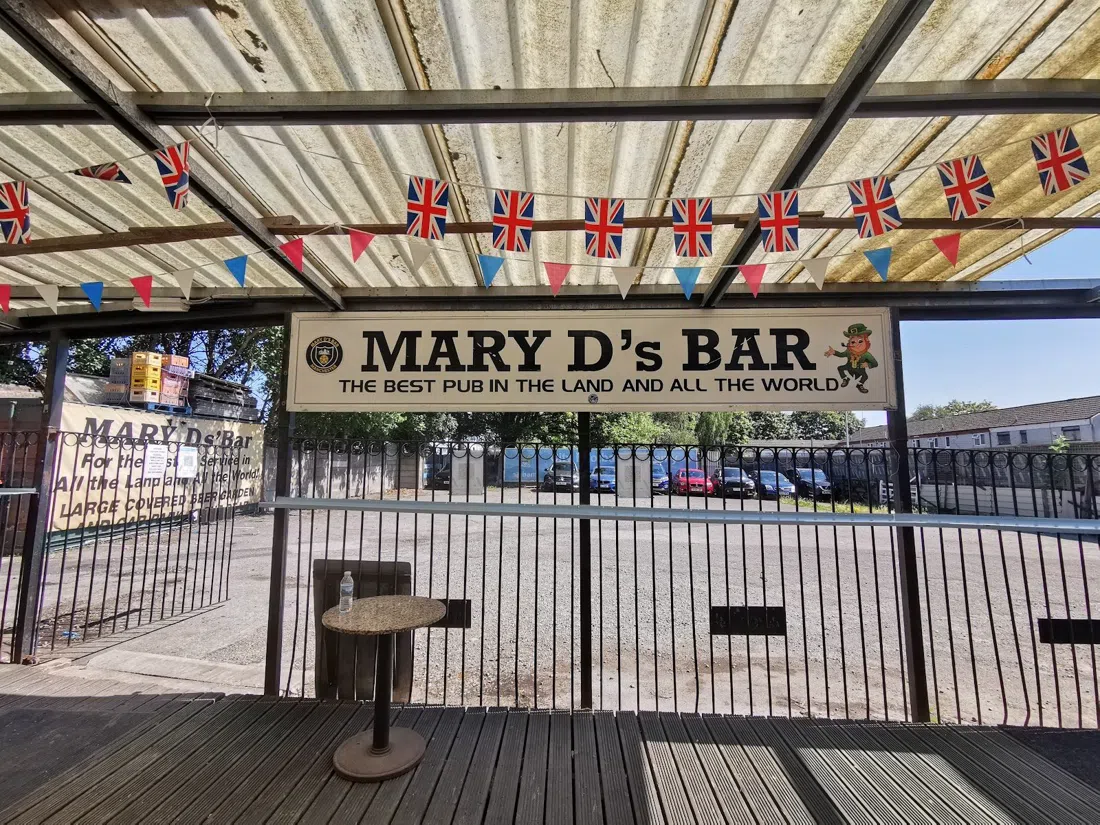
For the matchday pub side of the City experience, Mary D's Beamish Bar (Etihad Campus) is the closest equivalent to Bishop Blaize or The Trafford, but the door policy needs stating clearly for anyone travelling from outside the city: on matchdays it is City fans and ticket-holders only. Turn up on a non-matchday and it's a normal, welcoming Irish bar with no restriction at all — the distinction matters enough that it is worth building around your itinerary rather than finding out at the door with a group and nowhere else nearby to go.
Neutral ground
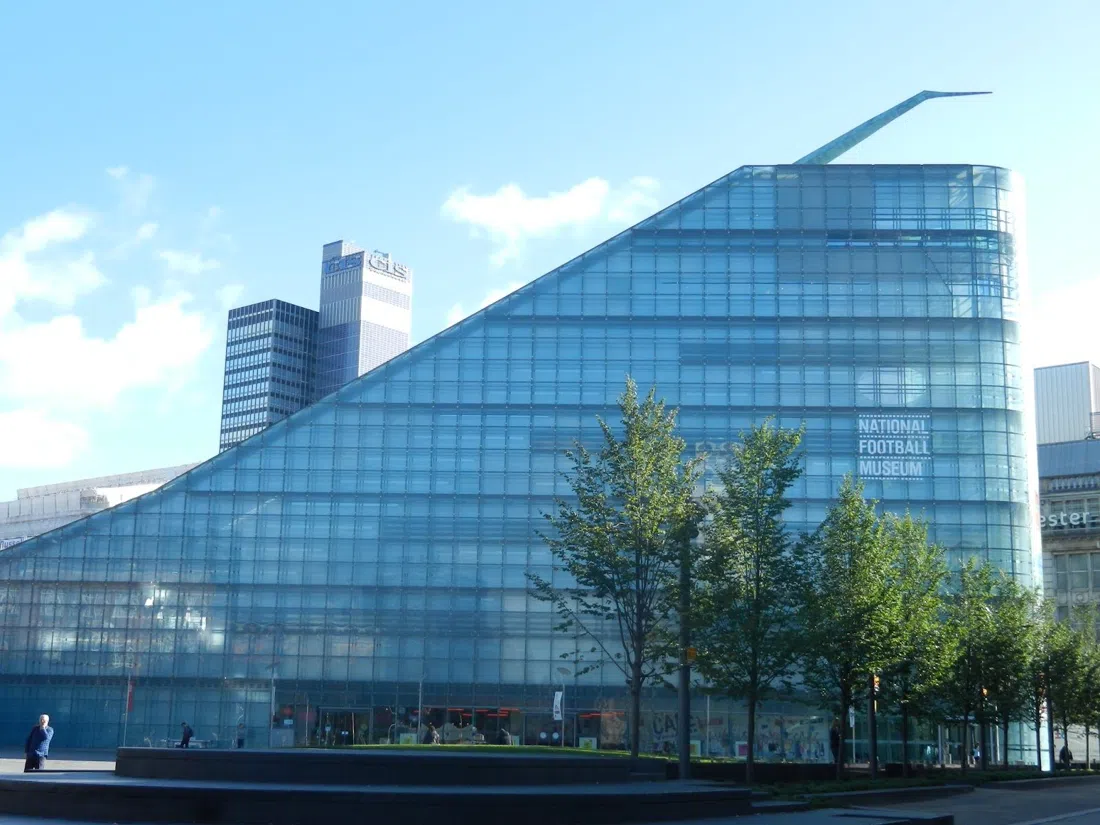
Everything so far has asked you to pick a side. The National Football Museum (city centre, Urbis building) doesn't. It is where the derby's shared civic history — not just the rivalry — gets told properly: Manchester's football story predates both clubs' current identities, and the museum treats City and United as two branches of the same civic tree rather than opposing teams to referee between. Entry is £13.50 online, free for Manchester residents with ID, and it is genuinely family-friendly and easy to bolt onto a day that otherwise revolves around one stadium or the other. If you only have time for one non-stadium stop on this trip, this is the one that makes the rest of it make sense — and it's the natural anchor for anyone building a wider Manchester guide itinerary rather than a single-club day trip built entirely around one badge.
Getting there, cash, timing and budget
Transport. Old Trafford is a fifteen-minute Metrolink ride from Manchester city centre on the Altrincham line (Old Trafford or Wharfside Media City stops, depending on which side of the ground you need); the Etihad is served by its own Etihad Campus stop on the Ashton line, similarly close to the centre. Neither ground requires a car, and on matchdays a car is actively a liability — book trams in advance of kick-off rather than after, since services run at reduced capacity relative to demand.
Cash. Card is accepted everywhere covered here, including the chip shop, but a matchday pub with three hundred people trying to order at once moves faster with contactless ready on your phone rather than fumbling for a card. None of these venues are cash-only, and that includes both stadium tours' gift shops.
Timing. Check both clubs' fixture calendars before booking anything — tours close on home match days at both stadiums, and Mary D's changes character entirely between matchday and non-matchday. A weekend with no home fixture at either club actually gives you fuller access to both tours; a weekend with one gives you the sharper, louder atmosphere around that ground but locks the tour itself for the day.
Budget. A full two-cathedral day — both stadium tours, lunch at Sam Platts or Lou Macari's, and the National Football Museum — runs roughly £70-100 per adult before food and transport, more if you add the VIP Etihad option or the City Football Academy extension. A night at Hotel Football pushes the overall trip toward a proper pilgrimage rather than a day excursion, and it's the one booking on this list worth making before anything else, especially for the memorabilia rooms, which vanish first every season.