
Wading the rivers the Victorians built over
Manchester's Victorian engineers didn't just build the city upward, with cotton warehouses, town halls and viaducts stitched across the skyline. They built it downward too, burying whole rivers under brick and iron to make room for the mills above. What survives beneath the modern city is a second Manchester: culverted waterways deep enough to wade through, railway arches turned into working bars, and cellar rooms that once stored coal, or housed the city's poorest tenants, and now pour pints. None of it is staged for the occasion. You have to go and find it, and in most cases, book ahead to do so.
By the 1840s, Manchester's booming textile trade had a space problem. The Irk, the Medlock and the Tib, three rivers that once defined the city's map, were narrow, filthy with industrial run-off, and standing in the way of the streets, warehouses and railway approaches the growing city desperately needed. The solution, worked out over decades of Victorian civil engineering, was to bury them: culvert the rivers into brick-lined tunnels and build straight over the top. Friedrich Engels, researching what became The Condition of the Working Class in England while living in Manchester in the 1840s, described the cellar dwellings clustered along the exposed stretches of the Irk in language that still reads as an indictment of the city's growth. Much of what he saw was paved over within a generation and forgotten by everyone except the people whose job it was to maintain the culverts.
Two operators now walk you through what's left, and they cover different ground, so it's worth doing both rather than picking one. Underground Manchester (New Manchester Walks; departs the city centre) is, for most of its length, a walking tour rather than a below-ground one. Historian Ed Glinert leads groups through the streets above, tracing where the Irk, Medlock and Tib now run invisibly beneath your feet, and stitching together the slum clearances, the cellar-dwelling scandal Engels documented, and the engineering that erased the rivers from view. It's walk-up, no booking required for the standard public tours, at roughly £10-15pp, with private group bookings available on request if you want the tour to yourselves. This is the one to do first, ideally on your first afternoon: it supplies the narrative thread that the two more physical tunnel visits below only gesture at.
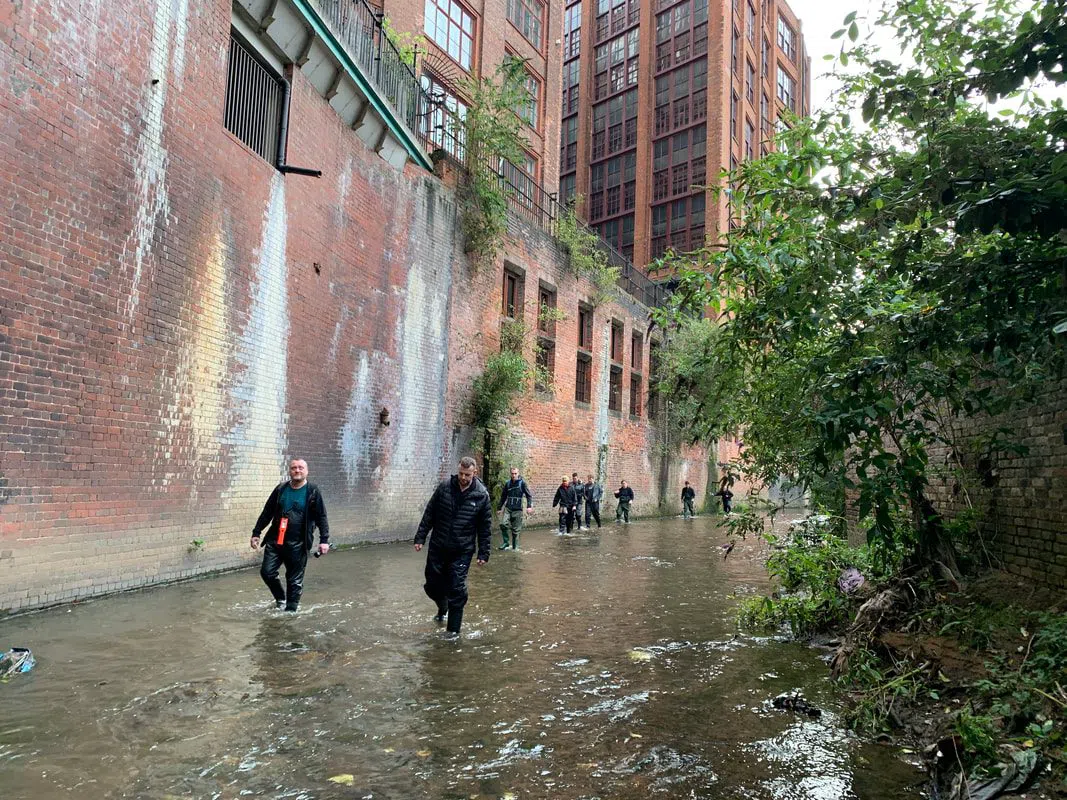
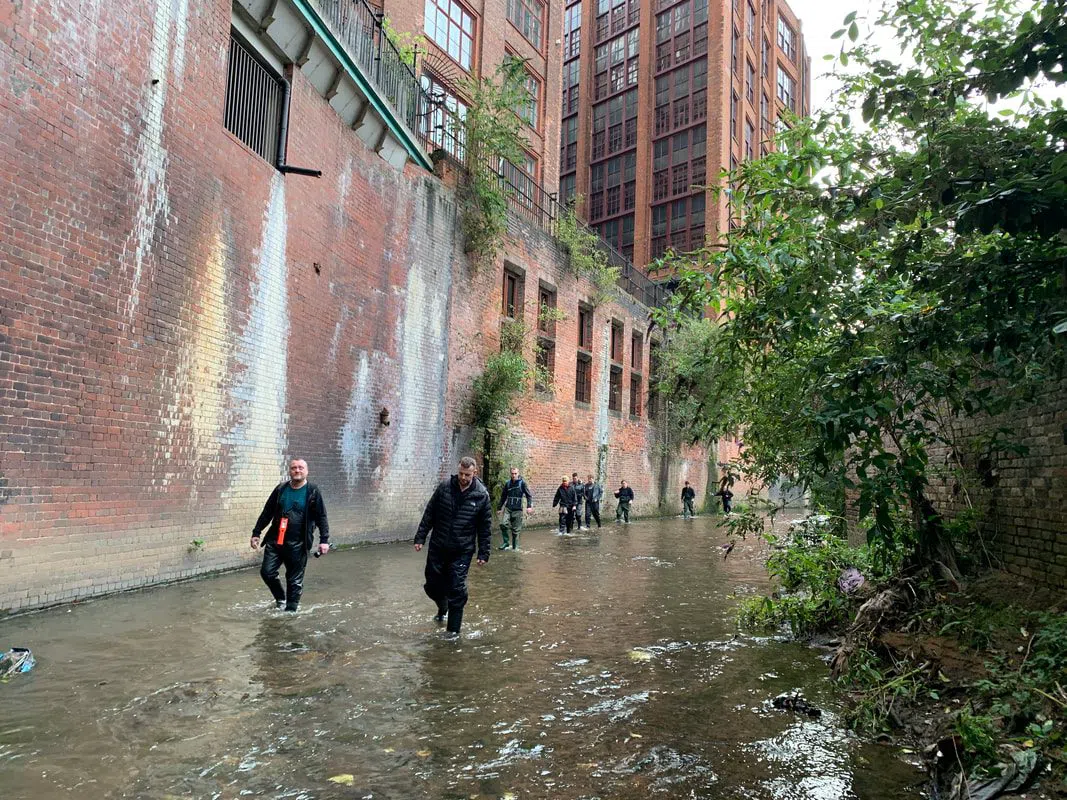
The Secret Tunnels Tour (Jonathan Schofield Manchester Tours; departs central Manchester) is the real thing: a genuine Victorian-engineered river culvert, not a re-enactment or a themed corridor, and you feel the difference the moment you're issued waders. Scheduled public departures run early morning and last 90 minutes to two hours, with private and corporate tours also bookable and customisable to group needs. At around £25pp it's the most expensive of the underground options here, and by some distance the most physically demanding: the operator is upfront that this requires a reasonable level of fitness, and you should take that seriously rather than as boilerplate caution. This suits people who want actual Victorian brickwork and running water underfoot, not a casual stroll. Claustrophobia and mobility issues both matter here in a way they simply don't for the walking tour above.
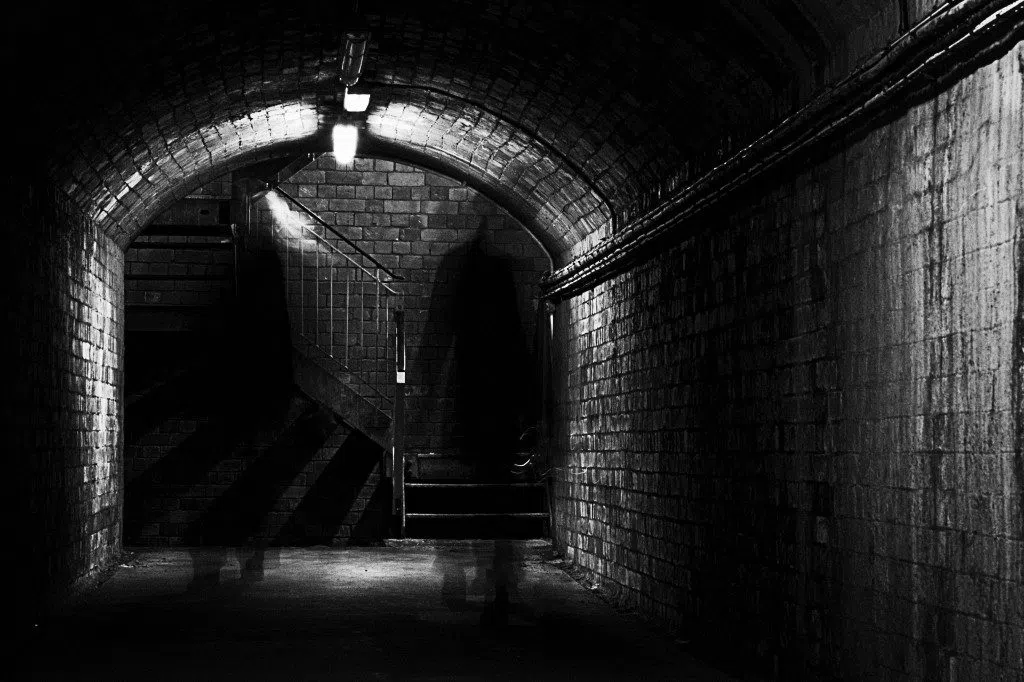
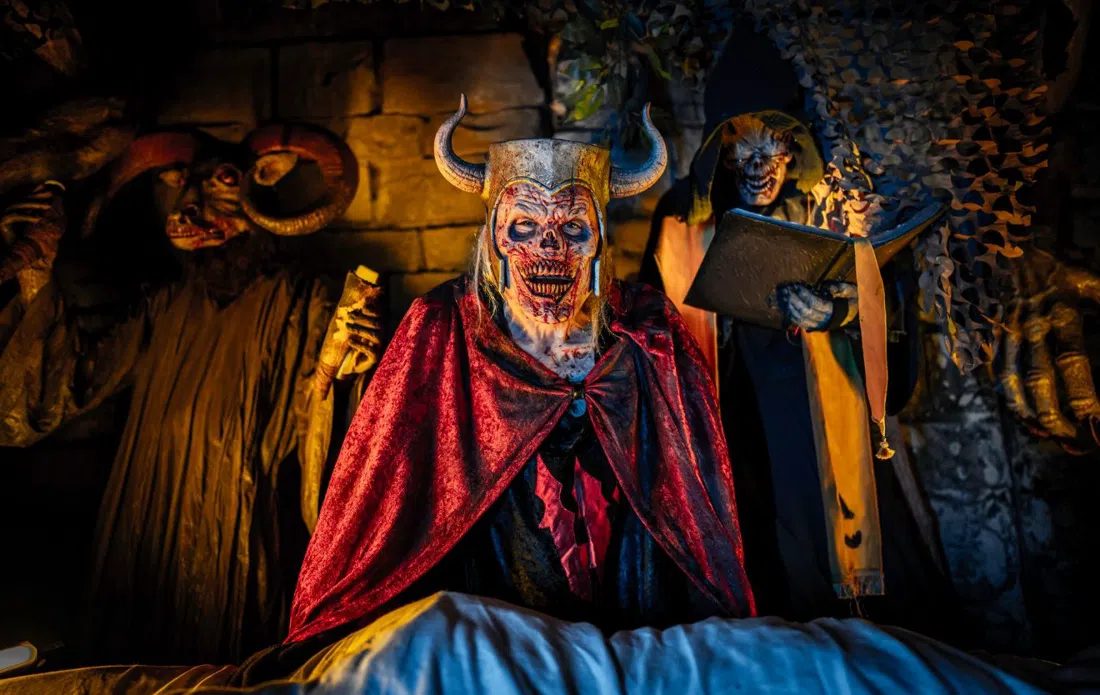
Flecky Bennett's Haunted Underground Experience (city centre) sits a little apart from the other two, and it's worth being precise about why: the operator itself is upfront that the vault predates Victoria's reign (it's Georgian), but it sits directly beneath one of Manchester's grandest Victorian goods warehouses, and that layering of eras is really the point of the visit rather than a technicality to skip past. It's a 90-minute immersive theatre experience rather than a straight history lecture, ticketed through Quay Tickets, with groups welcome given advance booking, at roughly £15-20pp. Go in expecting performance and atmosphere over historical rigour and you'll have a good time; go in expecting a strictly Victorian chamber and you'll spend ninety minutes arguing with the premise instead of enjoying it.
Drinking in the railway arches the Victorians left behind
Manchester's other great buried infrastructure is railways, not rivers: the brick viaducts Victorian engineers threw across the city centre to carry trains over streets rather than through them, leaving hundreds of arches underneath that have spent a century and a half as storage, workshops, and, increasingly, some of the best drinking rooms in the city.
Gorilla (Whitworth Street West) is the standard-bearer. A 550-capacity railway arch bar and live venue with four private hire spaces, it's one of the best surviving examples of a Victorian arch given a genuine second life rather than a themed makeover bolted onto old brick: the scale is real, the acoustics are real, and it works as hard on a Tuesday gig night as it does on a Saturday. It's group-friendly by design, but book ahead for weekends specifically, because it fills, and turning up cold on a Saturday night means queuing rather than drinking.

Cloudwater Brew Co Taproom (near Piccadilly) isn't strictly Victorian: it's a working brewery occupying railway arches rather than a Victorian cellar proper. But it's the closest living equivalent to the theme here, and it earns its place by being an actual working brewery rather than a themed bar borrowing industrial furniture for atmosphere. The open-plan industrial space suits groups well as a walk-in proposition, though it's worth contacting ahead if you're bringing a large party so they can plan for you. Pints run roughly £6-7, which is fair for cask and keg this good in a room with this much honest history in its brickwork.

The grandest and the smallest underground rooms in the city
If the tunnels give you the engineering and the arches give you the industrial afterlife, these two rooms give you the Victorian city's actual basements: spaces built below street level from the start, rather than repurposed from something else.
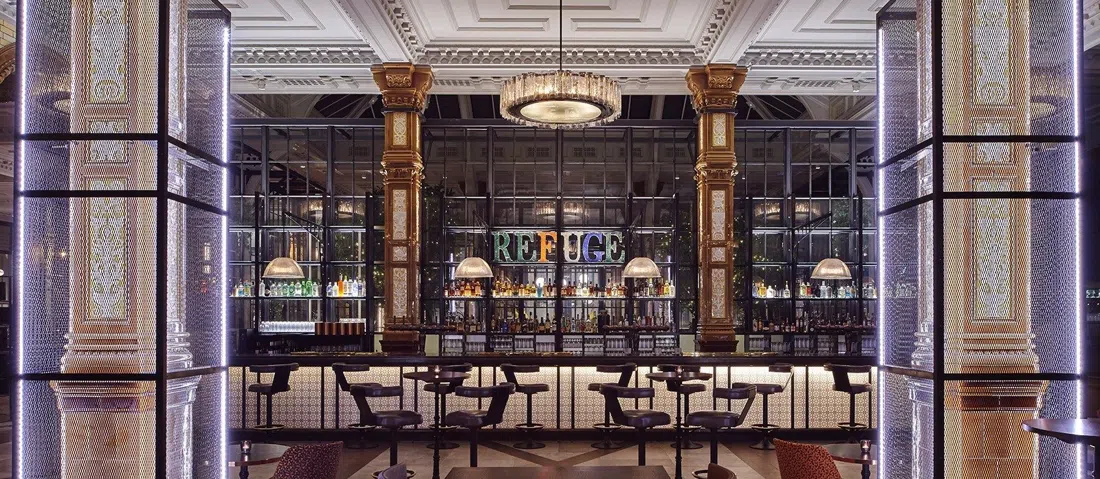
The Refuge, inside the Kimpton Clocktower Hotel (Oxford Street), occupies a basement ballroom that is Manchester's grandest surviving underground room: proper Victorian scale, ornate rather than merely large, and still functioning as a working bar rather than roped off as a museum piece for photographs. The large footprint makes it a strong choice for groups, and private hire is available for the room or sections of it. This is the one to suggest for a birthday, an anniversary, or a work occasion that wants to feel like an event rather than a squeeze into somewhere too small.
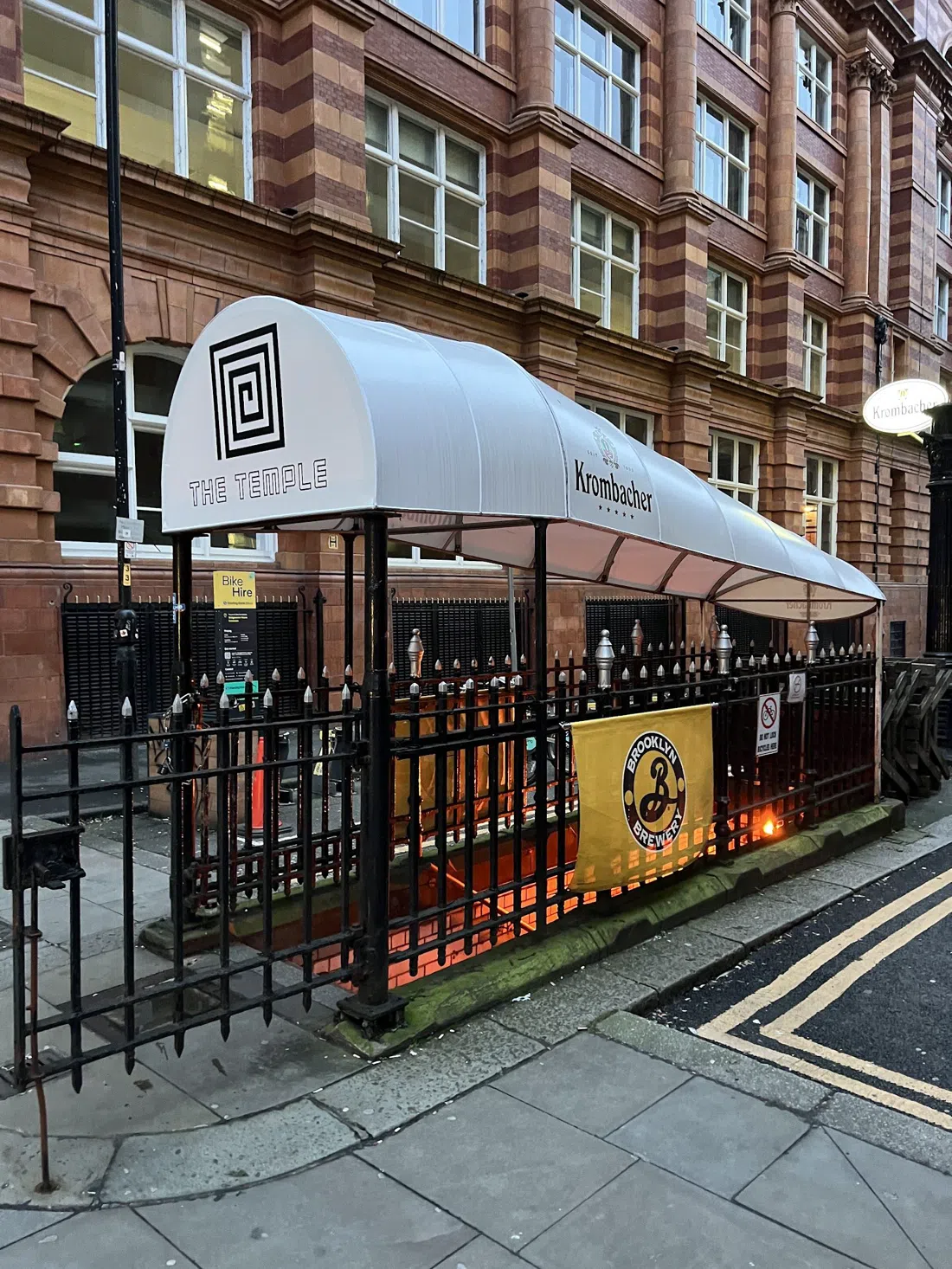
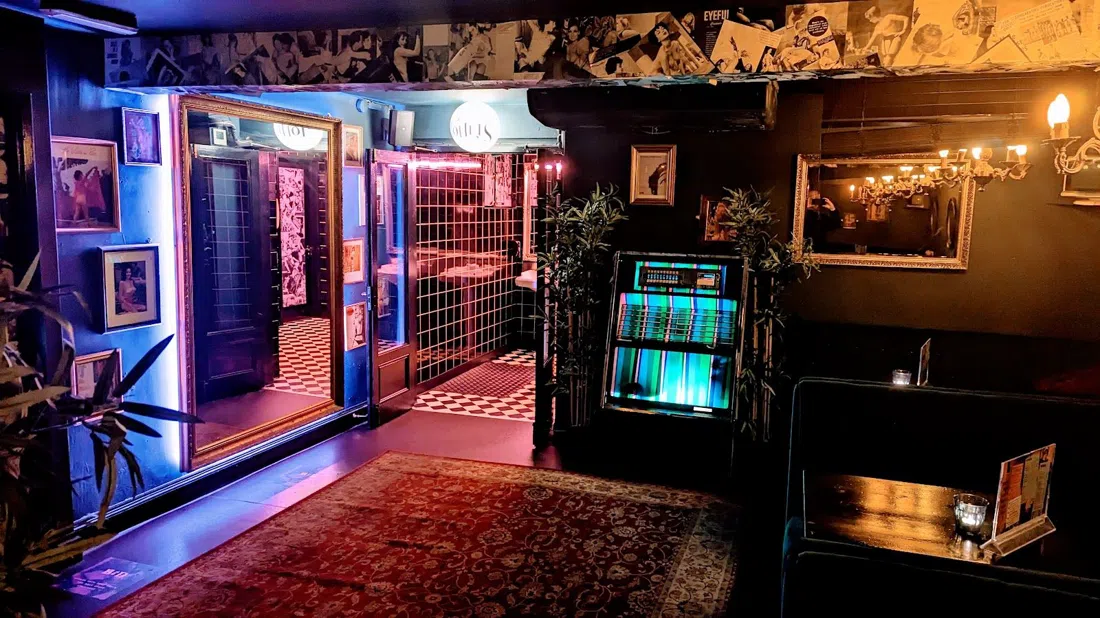
The Temple (properly the Temple of Convenience) is the opposite experience entirely, and deliberately so. It occupies a former Victorian public toilet on Oxford Road, well below street level, and it is tiny: not suited to large groups under any circumstances, small parties only. Prices are cash-friendly dive-bar prices, and the jukebox is better than a room this size has any right to host. The novelty of the space and the atmosphere it generates from sheer proximity to strangers are essentially the whole pitch here, and that's a feature rather than a limitation. Go in pairs or threes, not as a stag party, and you'll understand immediately why it has the reputation it does.
Northern Quarter cellars for a later, louder night
The Northern Quarter's shopfronts hide a run of genuine basement bars, and they range from a strict-headcount cocktail den to a 350-capacity arcade, so it's worth knowing which is which before you queue at the wrong door with the wrong-sized group.
Speak In Code (Northern Quarter) is ranked among the UK's top 50 cocktail bars and sits in a real hidden cellar rather than a manufactured speakeasy set, but the operative fact for planning is the door policy: a strict six-person maximum per party. This is explicitly not a big-groups venue, and turning up as a party of eight will get you turned away rather than squeezed in somehow. Cocktails run £12-15pp and the quality justifies the price, but bring a small group or split into two before you arrive.
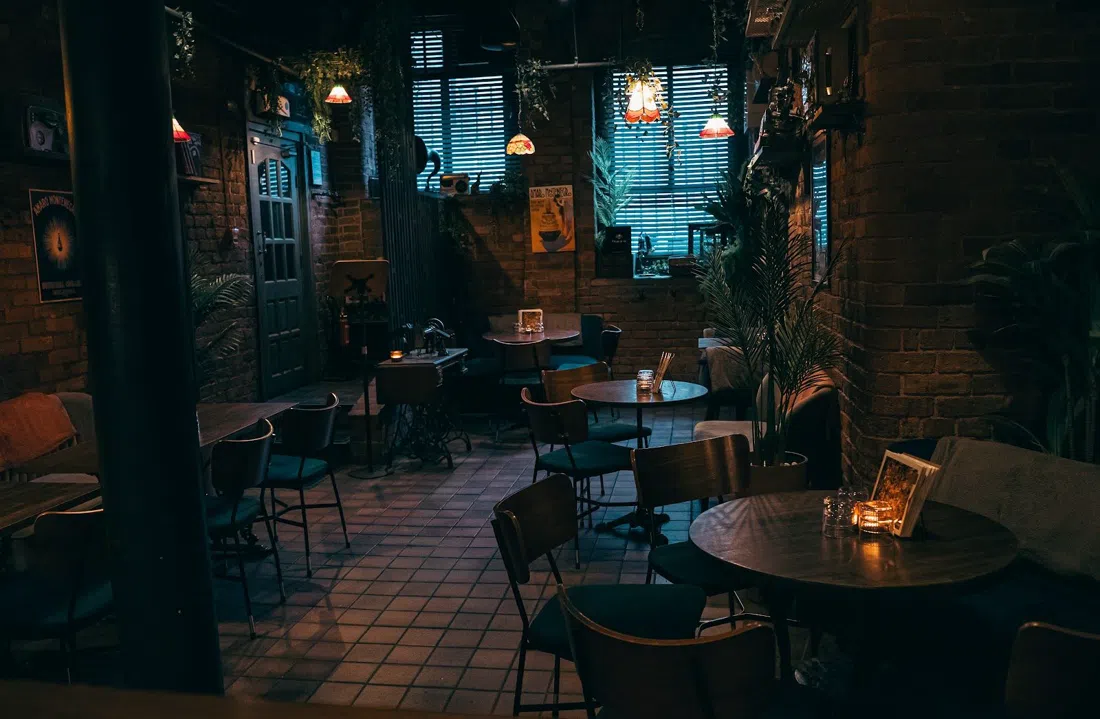
The Daisy at Evelyn's (Northern Quarter) is a hidden basement cocktail bar with real historic bones rather than manufactured vintage dressing, open Thursday to Saturday evenings only, so don't build a Monday night around it. It's bookable for groups and private hire, and it's a good change of pace after an afternoon underground on the tunnel tours: something quieter and more considered, with cocktails around £12-14.

Behind Closed Doors (Northern Quarter) leans playfully retro rather than strictly Victorian in its decor, but the basement itself is a full lower level under a Northern Quarter shopfront, and it's worth visiting on those terms rather than expecting museum-grade period detail. It stays open until 4am and has a private Penthouse Karaoke room that holds up to 18, useful for a group that wants somewhere that won't turn the lights on at midnight.
NQ64 (Northern Quarter) closes out the list as the most straightforwardly group-friendly stop on it: a 350-capacity retro arcade bar occupying a genuine Northern Quarter cellar, open late seven nights a week. It isn't historic in itself; the appeal is entirely the games, not the architecture. But it gives the evening a lighter, sillier beat against the older, heavier entries above it. Tokens start from £9.50 for 15, and the consoles themselves are free to queue for, which makes it a low-cost, low-stakes way to close out a night that started underground in a Victorian culvert.
Getting underground, in practice
Base yourself centrally and everything above is walkable or a short tram ride apart. Manchester's underground scene clusters around the city centre, Oxford Road and the Northern Quarter, so you don't need to plan for long transfers between stops. If you're building a full weekend around this itinerary, start with Manchester hotel search for somewhere central; the Northern Quarter and the Oxford Road/Deansgate corridor put you within ten minutes of nearly everything on this list.
Book the tunnel tours ahead, always. The Secret Tunnels Tour's public departures run early morning and sell out; Flecky Bennett's is ticketed in advance through Quay Tickets; Underground Manchester's public walks are more forgiving but private group bookings still need lead time. For the bars, only Speak In Code's six-person cap and Cloudwater's larger-party contact requirement need advance thought. Everywhere else on this list, you can turn up on spec, though weekends at Gorilla and NQ64 reward getting there early rather than after 10pm.
Carry cash for The Temple specifically: it's a dive bar in spirit and in pricing, and it's happiest with it, though cards are accepted almost everywhere else on this list now. Wear closable, grippable shoes for the Secret Tunnels Tour; waders are supplied, but you're walking on wet Victorian brick and running water, not a museum floor. Budget an afternoon for one tunnel tour and an evening for two or three of the bars. Attempting all three tunnel and tour options in a single day is technically possible but relentless, and the bars reward lingering far more than they reward checking boxes.
This is a piece best read as an itinerary rather than a list: pair a morning underground with an evening cellar crawl, and Manchester's Victorian city stops being a backdrop to the industrial surface story everyone already knows, and starts being the story itself. For the rest of the city above ground, the Manchester guide picks up where this piece leaves off.